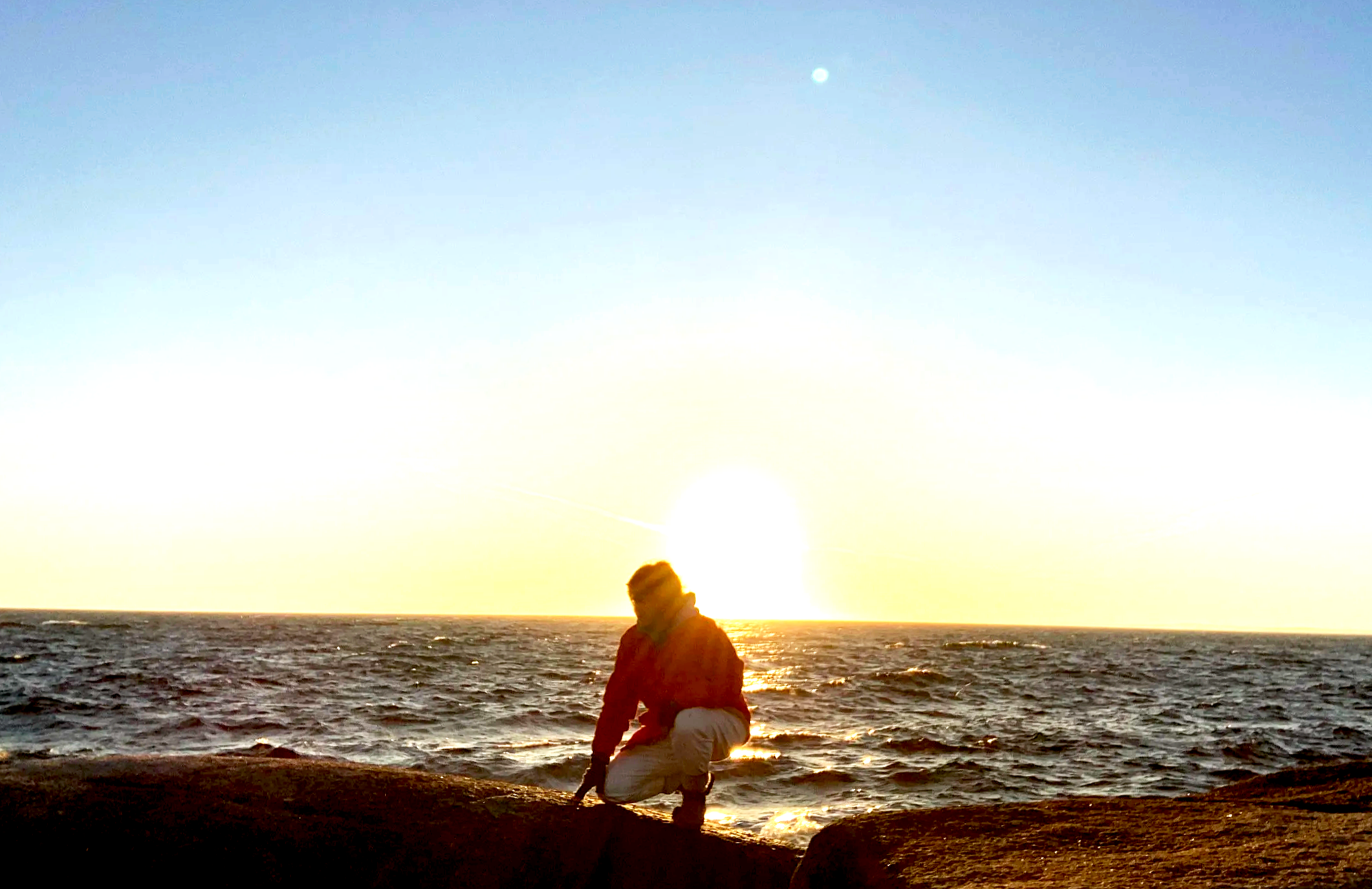
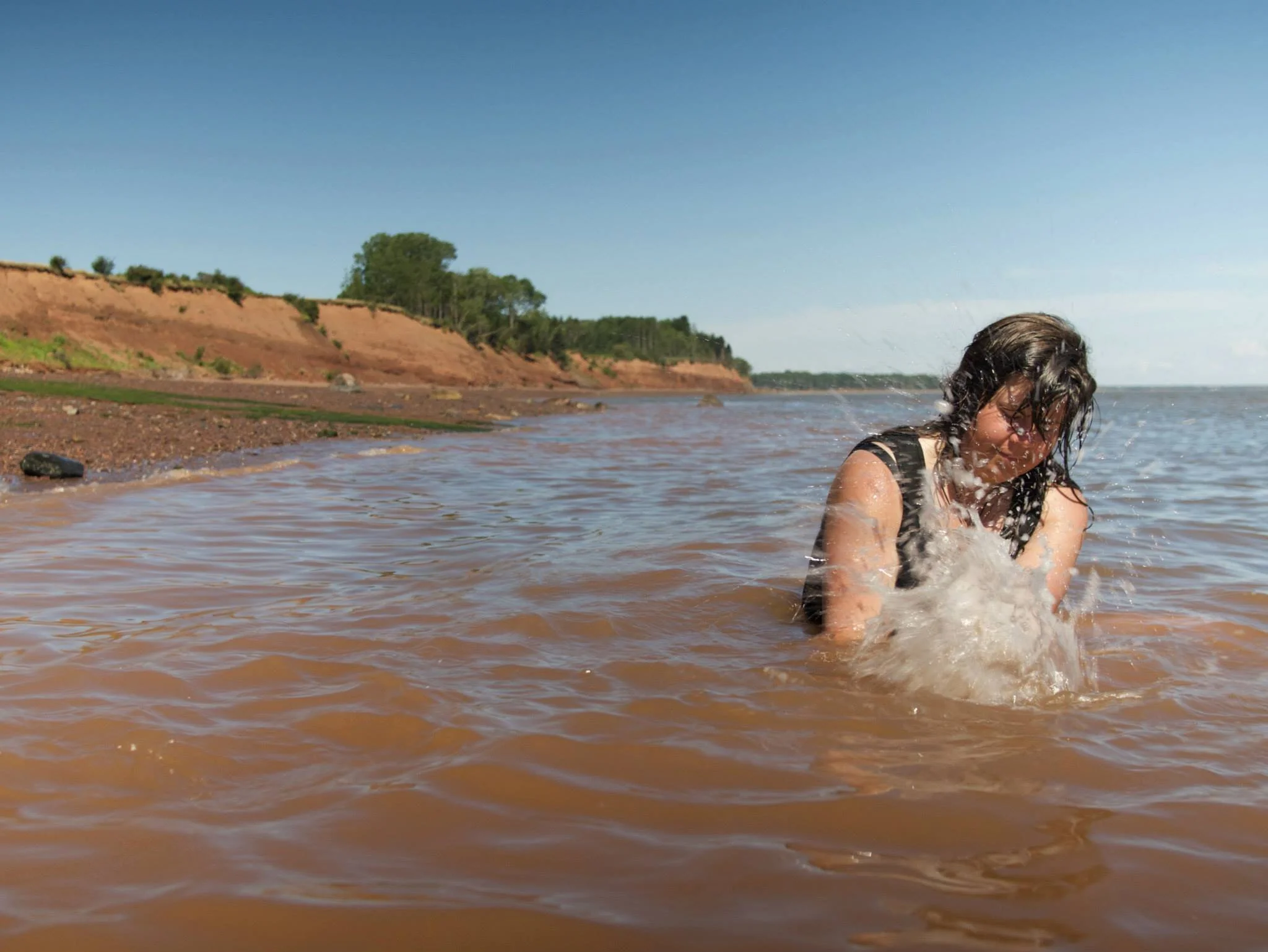
Lindsay Dawn is a Kanien'kehá:ka - Acadian - Irish - Scottish water protector, sound artist, whale listener, poet, educator, and lifelong learner who gratefully lives and creates within Wabanaki. Born in Kenepekachiachk—a tidal tributary of Wolastoq ('the beautiful river') in the Northern Appalachians—their practice follows the highest (and lowest) tides in the world, within the unceded and unsurrendered lands of L’nuk, Wolastoqiyik, and Peskotomuhkati, Bay of Fundy. They have also spent significant time living north of the 60th parallel.
Lindsay Dawn’s relational and place-responsive practice is guided by curiosity rather than form—the way of water. They are committed to creative paths that honour the ever-changing thresholds between land and sea, embracing an emergent (and submergent) ethics of improvisation rooted in kinship, living processes, deep listening, play, and mutual flourishing. At the heart of their practice is the drum—a living instrument through which their genre-fluid, transdisciplinary work unfolds in relation to bodies, ecologies and temporalities. Their participatory art experiences invite re-membrance, shared movement, and connection through the wonder of sound. Attuned to vibrational, relational, and imaginal resonance, Dawn’s work follows ancestral, tidal, and cyclical rhythms as pathways to creative sovereignty—co-weaving connection, care, and survival within shapeshifting worlds.
A committed collaborator, facilitator, and steward of creative process, Lindsay Dawn has co-created with artists, scientists, Elders, youth, and the beyond-human within Wabanaki and across Turtle Island. Their practice focuses on local, place-based arts initiatives—bridging kinship with plants, animals, and the elemental—and is rooted within Land Back and Healing Justice lineages. Their collaborative work includes improvising music with constellations of human and beyond-human beings; designing and facilitating sound art programs for children, including those with disabilities; creating place-and-time-responsive radio transmissions; composing and sound recording for film, dance, and interdisciplinary performance; and curating interdisciplinary art projects rooted in land-and-water-based pedagogy.
Their practice often engages in community-based care work through collective memory, storytelling exchange, and embodied futurism practices. They are also conducting sound-based research in partnership with water scientists and holders of traditional, place-based water knowledge, exploring ecological and acoustic knowledge systems. Lindsay Dawn’s work has been shared nationally and internationally, and they are the recipient of the Arts Nova Scotia Emerging Artist Recognition Award (2019) and the Canada Council for the Arts’ Robert Fleming Prize (2021), awarded annually to an emerging composer in Canada.
As a human being held within constellations of kinship, Lindsay is committed to practices of heart-centred (re)connection, (ex)change, renewal, and worlding that uphold respectful relations and honour interstitial ways of being. Their work is grounded in lived experience as a site of coming to (un)know, attentive to the shared beingness, life, and resilience in meeting waters. Often found among animals and plants, Dawn moves through the world with deep gratitude for the sanctuaries and lineages of beings that hold and sustain life within a vast web of love, relation, and expression. Offered as a gesture of devotion, their work listens toward what is both indescribable but intimately known, giving thanks for the teachings, guidance, and ways of knowing shared by the many teachers—human and more-than-human—who continue to shape their life.


Lindsay Dawn Dobbin gratefully acknowledges the support of: